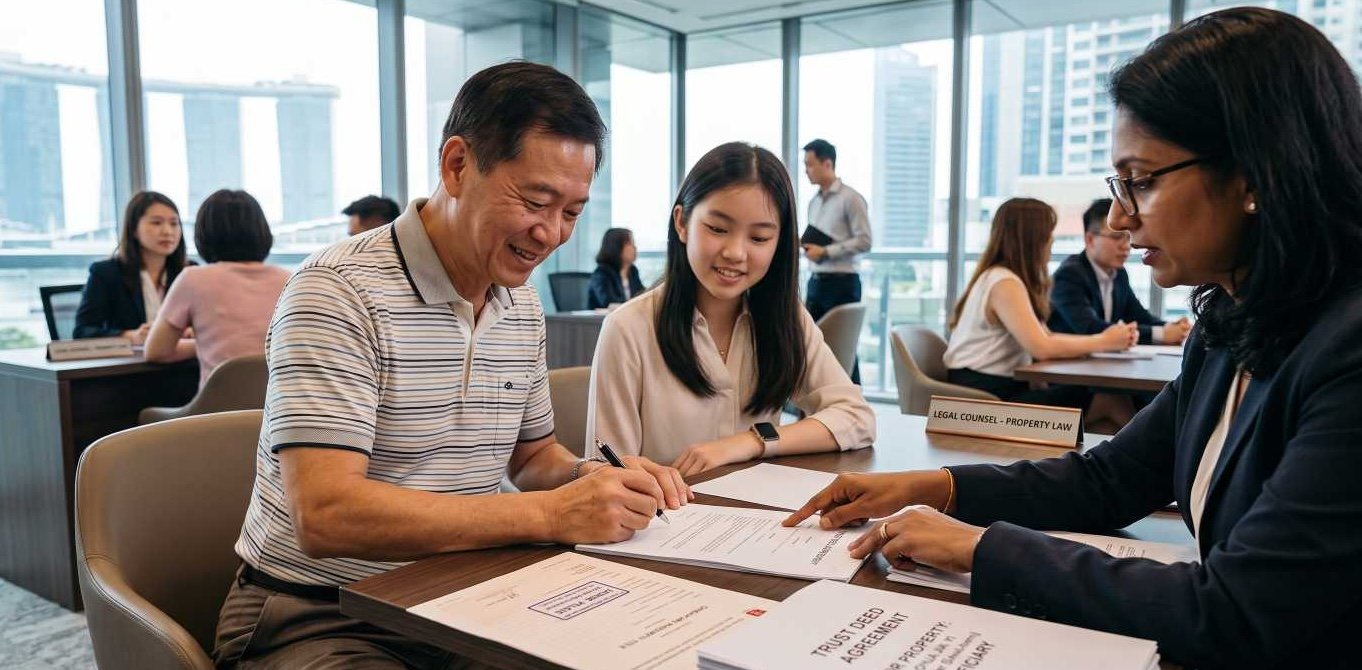
For many affluent individuals in Singapore, buying a property under a trust is an attractive strategy to safeguard their children's financial future. A trust structure involves a trustee (usually a parent) holding an asset for the benefit of a beneficiary (usually a child).
While this strategy offers distinct advantages for legacy and succession planning, it also comes with strict financial requirements, legal constraints, and tax implications. If you are considering this path, here is what you need to know.
Why Buy Property Under a Trust?
Most buyers who utilize a trust structure are motivated by legacy planning and the desire to provide an advanced inheritance to their loved ones. Key benefits include:
- Safeguarding Vulnerable Beneficiaries: A trust is highly beneficial for individuals at risk of manipulation or those who cannot legally hold property, such as minors (under 21 years old in Singapore) and individuals with disabilities.
- Succession Planning: A trust allows for a smooth, confidential transfer of assets without having to wait until the settlor passes away. It offers greater flexibility than a Will, allowing parents to stipulate when beneficiaries receive their inheritance or provide ongoing financial support.
- Asset Protection: Properties held in trust are generally protected from creditors because the debtors are not the beneficial owners. Additionally, trust assets are typically excluded from divorce settlements as they are not considered matrimonial assets.
Crucial Financial and Legal Considerations
Despite the benefits, purchasing property under a trust requires massive capital and careful legal navigation. Here are the key factors you must consider:
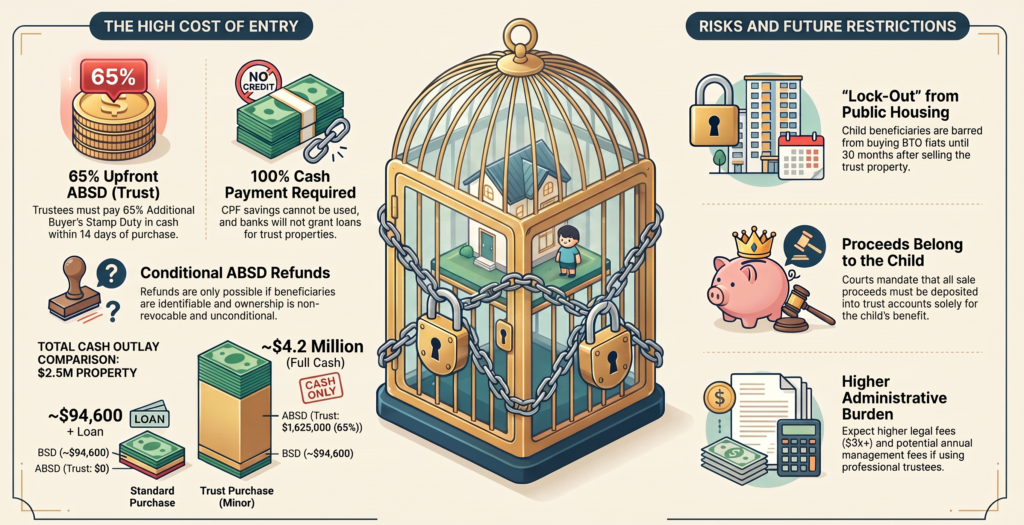
1. You Must Pay Fully in Cash Properties purchased under a trust generally cannot be financed through conventional means. Buyers must pay for the property entirely in cash. You cannot use your CPF funds, and financial institutions will not grant bank loans for trust properties.
2. The 65% Upfront ABSD (Trust) Rule As of April 27, 2023, the government introduced a stringent cooling measure: an Additional Buyer's Stamp Duty (ABSD) of 65% must be paid upfront in cash for any residential property transferred into a living trust. For a $2.5 million property, this brings the total cash required to over $4.2 million when factoring in the Buyer's Stamp Duty (BSD) and ABSD.
Fortunately, trustees can apply for an ABSD remission (refund) from the Inland Revenue Authority of Singapore (IRAS) within six months of executing the instrument. To qualify for this refund, the trust must meet strict criteria:
- The property must be held for identifiable individual beneficiaries.
- Beneficial ownership must be vested immediately—it cannot be deferred until a future milestone (e.g., graduating university or turning 21), contingent, or revocable.
3. Impact on the Beneficiary’s Future Property Purchases Putting a property in your child's name means they are legally regarded as property owners. This severely restricts their future housing options:
- They will be ineligible to purchase HDB Build-to-Order (BTO) flats with their future spouse.
- Even if the trust property is eventually sold, they must serve a 30-month waiting period before applying for a BTO flat, or a 15-month waiting period for a resale HDB flat.
- If they wish to purchase another private property while still holding the trust property, they will be subjected to standard ABSD rates.
4. Higher Legal, Admin, and Tax Costs Purchasing via a trust incurs noticeably higher legal costs compared to a standard property transaction. A Trust Deed can cost upwards of $3,000. Furthermore, if you appoint a professional trustee, they typically charge an ongoing annual management fee of 0.5% to 1.5% of the trust's total asset value. Additionally, if the property is rented out, the rental income is taxable based on the beneficiary's personal income tax rate, or at a flat corporate rate of 17% if the beneficiary is a non-resident.
Real Risks and Considerations for buying a property under trust in Singapore
A common pitfall for parents is assuming they still have access to the property's value or can treat the trust as a temporary holding vehicle. Recent High Court rulings have firmly demonstrated the rigid nature of property trusts and the severe implications for parents who attempt to reverse them:
Case 1: The Cash-Strapped Father A man who bought two properties totaling $2.4 million in trust for his young children struggled to keep up with mortgage payments due to job insecurity. He applied to the High Court to sell the apartments. While the judge approved the sale to prevent foreclosure, the court mandated that all net proceeds be deposited into trust accounts exclusively for the children. The father was legally barred from touching the funds for his own financial needs.
Case 2: The Profit-Seeking Mother A woman attempted to sell a condo unit held in trust for her son because the property's value had increased. The High Court rejected her application, ruling that her motivation was her own financial gain rather than safeguarding her son's asset. This case affirmed that the court will only authorize a sale if it genuinely benefits the beneficiary.
Case 3: The Divorcing Fathers In two separate divorce cases, fathers attempted to dismantle property trusts they had set up for their children, arguing the trusts were merely ploys to avoid paying ABSD. The courts ruled against them, stating the trusts were properly created gifts and could not be dismantled without the beneficiaries' consent. In one case, the father lost his decision-making rights over the property, and in the other, the court ordered the immediate transfer of legal ownership to the adult son.
Ready to structure your legacy safely? WhatsApp me to stress-test your property trust strategy today.
💬 Discuss My Trust Strategy
Crucial Implications for Buyers
These cases highlight several critical implications that buyers must understand before executing a trust:
- Irrevocable Loss of Control: When you buy a property in trust, it is an outright gift. You cannot assume the child is merely holding it for you. If you face financial difficulties or a divorce, you cannot liquidate the asset to reclaim the funds.
- Strict Court Oversight on Sales: If the trust deed does not expressly provide the trustee the authority to sell, you must seek the beneficiary's consent or a High Court order. The court will only approve a sale if it leads to better management of the child's assets, not to alleviate the parents' financial burdens.
- Severe Penalties for "Sham" Trusts: Creating a trust solely to evade ABSD can result in severe repercussions. If a parent misuses trust proceeds for their own expenses, it signals that the trust is a sham. Offenders can face severe penalties, including having to pay the avoided stamp duty plus an additional 50% surcharge.
Trust vs. Private Limited Company: The Illusion of Choice
Clients often ask why they shouldn't just set up a Private Limited ($Pte\ Ltd$) company to buy the property instead of dealing with a rigid trust structure.
Here is why that door is shut:
| Feature | Property Under Trust | Private Limited Company |
| Upfront ABSD | 65% | 65% |
| ABSD Refund Eligibility | Yes (If conditions are met) | No (Strictly non-remittable) |
| Financing / Loans | 100% Cash | Corporate Loan possible (Subject to Total Debt Servicing Ratio - $TDSR$) |
Is Buying Under a Trust Right for You?
Despite the hefty 65% upfront ABSD and stringent rules, buying under a trust remains an attractive tool for ultra-wealthy, cash-rich buyers seeking to execute genuine estate planning and advanced inheritance.
Because setting up a trust is an irrevocable legal arrangement with massive financial implications, it is highly recommended to consult with legal advisors and financial professionals to ensure the structure is tailored to your specific needs and complies with all legal requirements.